ZHI YAN Group Co.,Ltd Leading technology Custom machinemachine manufacturers
Contact No.:+86 18221614363
Email:zhimachine@foxmail.com
Contact No.:+86 18221614363
Email:zhimachine@foxmail.com

Adr :636 Yunqiao Road, Pudong New Area, Shanghai, China
Phone : +86 18221614363
Email : zhimachine@foxmail.com
Tel : +86 18221614363
processing capacity:5-50000tons/d
Application scope:milk
Product introduction: Core characteristics of pasteurized milk:
low-temperature mild sterilization, maximum preservation of fresh
flavor and active nutrients; Full cold chain storage and transportation
at 2-6 ℃, with a shelf life of 5-15 days, different from UHT sterilized
milk at room temperature.
Automatic pasteurization milk production line
Complete introduction of pasteurized milk production line
Core characteristics of pasteurized milk: low-temperature mild sterilization, maximum preservation of fresh flavor and active nutrients; Full cold chain storage and transportation at 2-6 ℃, with a shelf life of 5-15 days, different from UHT sterilized milk at room temperature.
Complete process mainline: raw material acceptance → receiving, cooling and storage → filtering and purifying milk → degassing → component standardization → homogenization → pasteurization → rapid cooling → aseptic cold filling → finished product refrigeration → cold chain outbound
1、 Step by step detailed explanation of the entire process+equipment and process parameters
1. Raw milk receiving and inspection (incoming quality inspection)
Milk tanker truck entering the factory, sample and test first, reject if it is unqualified directly
Testing items: sensory, acidity, fat, protein, freezing point, antibiotics, total bacterial count, somatic cells, pathogenic bacteria.
Equipment: Sampling valve, online detector, discharge pump, dual filter
Qualified fresh milk is sealed and unloaded into the milk storage tank, immediately cooled to a low temperature of ≤ 4 ℃ for temporary storage, to inhibit bacterial growth.
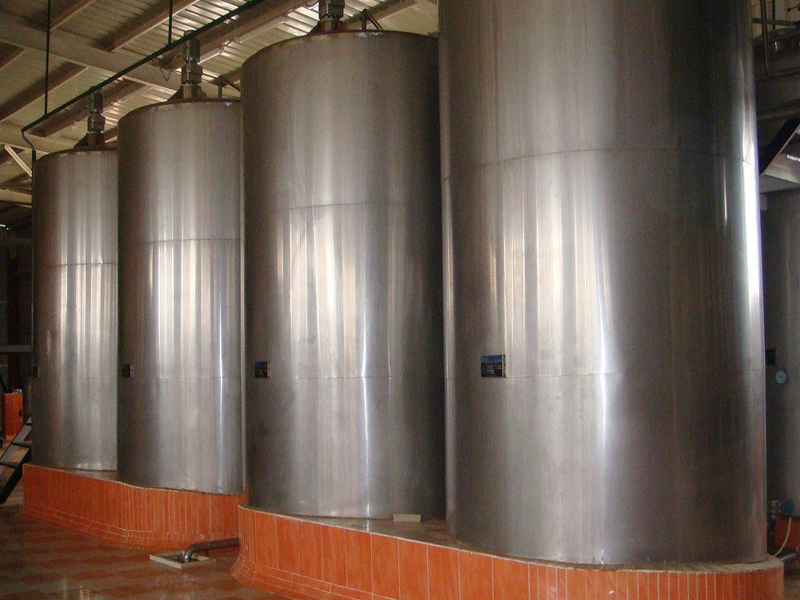
Tank configuration: 304/316L stainless steel insulated milk bin with mixing, temperature sensor, CIP cleaning interface
2. Pre treatment section (purification, degassing, standardization)
1) Centrifugal milk purification
High speed centrifugation of the milk purifier removes small impurities, somatic cells, and some spores; Higher purification level than simple filtration.
2) Vacuum degassing (optional high-end configuration)
Remove dissolved air from milk to prevent oxidation, fat floating, and foaming during filling, improving taste and shelf stability.
3) Standardization (fat regulation)
The centrifuge separates fresh milk into cream and skim milk, and mixes them accurately according to the formula: full fat 3.2% -3.5%/low-fat 1.5%/skim<0.5%, ensuring uniform product indicators for each batch.
Equipment: Cream separator, online proportioning system, buffer balance tank
3. Homogenization process
-Process temperature: 60-65 ℃
-Two stage homogenization pressure: first stage 15-20 MPa, second stage 3-5 MPa
High pressure breaks down large fat globules into tiny particles, preventing milk from forming a layer of milk skin and providing a smooth and stable taste.
Equipment: High pressure two-stage homogenizer (for dairy products)
4. Pasteurization host (core unit of the entire production line)
There are two mainstream processes in the industry:
1. HTST high temperature short-term
72-85 ℃, keep warm for 10-15 seconds
The plate heat exchanger comes with a heat recovery section: the hot milk after high-temperature sterilization preheats the cold raw milk, saving 75-90% energy; Afterwards, the ice water rapidly cooled down.
Comes with reflux protection: Once the sterilization temperature does not meet the standard, the material will automatically reflux back to the balance tank and flow towards the filling is prohibited.
2. LTLT low-temperature long-term (small intermittent)
62-65 ℃, keep warm for 30 minutes, mostly used in small factories and fresh milk bars.
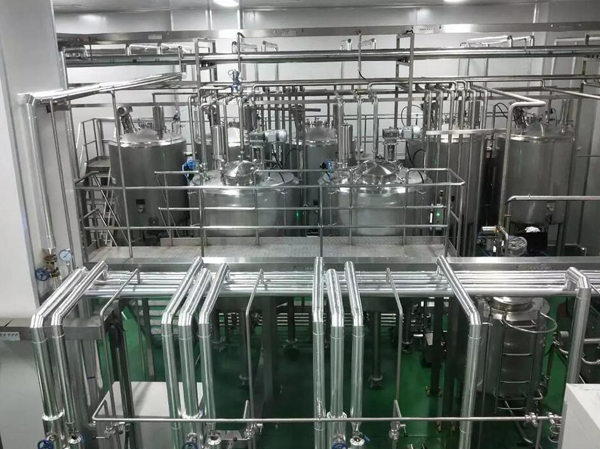
Complete set of sterilization unit integrated modules: plate heat exchanger, insulation pipe, hot water system, PLC temperature control, automatic directional valve, recorder (production traceability)
5. Rapid cooling
After sterilization, quickly cool down to 2-6 ℃ to terminate the thermal effect, inhibit the proliferation of residual microorganisms, and lock in the freshness of the milk.
Equipment: refrigeration unit, ice water plate cooling section, sterile buffer tank (low-temperature temporary storage to be filled)
6. Filling and sealing (cold filling)
Full process low-temperature clean environment filling
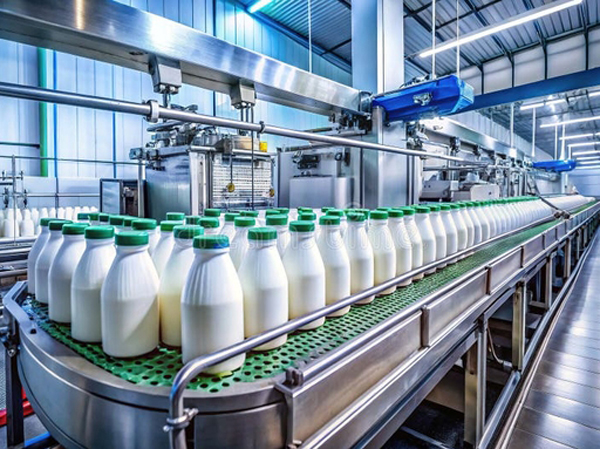
Packaging options include glass bottles, PET plastic bottles, roof boxes, Bailey bags, and independent bags
Equipment types: roof box filling machine, blow filling rotary machine, bottle negative pressure filling machine, cup filling machine; Matching labeling machine, inkjet printer (production date).
>Key point: After filling, the product still needs to be fully refrigerated and cannot be stored at room temperature.
7. Finished product later stage: refrigerated storage, quality inspection, cold chain distribution
After filling, it is sent to the 2-6 ℃ finished product cold storage; Sampling and retesting of microbial and physicochemical indicators; Insulated refrigerated truck delivery service provider supermarket terminal.
2、 Supporting public system (standard for dairy factories)
1. Fully automatic CIP on-site cleaning system
Acid tank, alkali tank, hot water tank, pipeline pump automatic circulation cleaning of the entire pipeline, tank body, sterilization machine, filling machine; No need to disassemble, ensuring food safety, mandatory requirement for SC production license for dairy products.
2. Refrigeration system: screw chiller, ice water cycle
3. Hot water boiler/steam system: provides heat source for sterilization unit
4. PLC fully automatic central control system: one click start stop of the entire production line, temperature and pressure curve storage, production data traceability, alarm recording
3、 Production line capacity division (selection reference)
1. Small fresh milk bar/workshop: 200-1000L/h (intermittent sterilization tank)
2. Small and medium-sized local dairy enterprises: 1-5 tons/hour (plate type fully automatic pasteurization unit)
3. Large scale chemical plants: 10-25 tons/hour, fully automated and unmanned throughout the entire line
4、 Core difference between pasteurized milk and UHT room temperature milk
|Project | Pasteurized Fresh Milk | UHT Room Temperature Pure Milk|
|---|---|---|
|Sterilization process | 72-85 ℃/10-15 seconds | 135-142 ℃/3-5 seconds ultra-high temperature instantaneous|
|Shelf life | 5-15 days (refrigerated at 2-6 ℃) | 6-12 months stored at room temperature|
|Nutritional flavor | More natural active substances retained, fresh milk aroma | Flavor changed by high temperature, resulting in more loss of active nutrients|
|Storage and transportation conditions | Full cold chain | Ordinary warehousing logistics|
All rights reserved:Zhi Yan Group Co., Ltd SitemapSitemapCandy making machine candy production line Toffee production line biscuit production line lollipop production line Gummy production line Popping boba production lineManufacturer
-7854.jpg)