
ZHI YAN Group Co.,Ltd Leading technology Custom machinemachine manufacturers
Contact No.:+86 18221614363
Email:zhimachine@foxmail.com
Contact No.:+86 18221614363
Email:zhimachine@foxmail.com
Adr :636 Yunqiao Road, Pudong New Area, Shanghai, China
Phone : +86 18221614363
Email : zhimachine@foxmail.com
Tel : +86 18221614363
Types and Technical Features of Decolorization Machines in Syrup Processing Equipment—Complete Sets of Equipment for Sugar Syrup Production Lines
1. Activated Carbon Decolorization Equipment
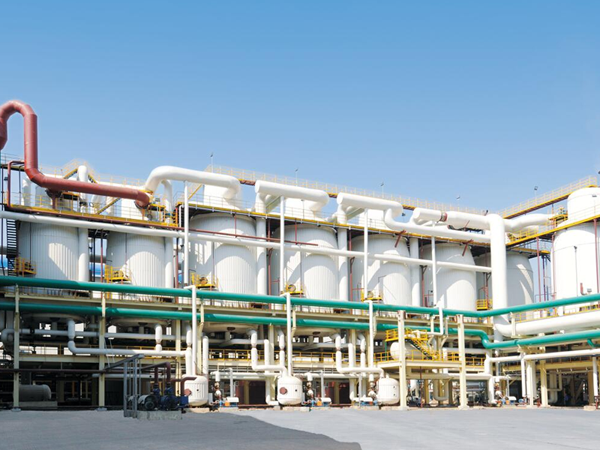
Equipment Configuration: Consists of a decolorization tank, filtration unit, and activated carbon regeneration system.
Operating Process:
1. The syrup is preheated to 40–80°C (to increase molecular diffusion rates) and then mixed with activated carbon in a specific ratio.
2. Under agitation, the mixture reacts for 20–60 minutes, during which pigments are adsorbed.
3. Spent carbon is removed via plate-and-frame filtration or centrifugation, and the clarified syrup proceeds to subsequent processes.
Technical Features:
Advantages: Wide applicability (sugar syrup, corn syrup, maple syrup, etc.), high decolorization efficiency (decolorization rate up to 80%–95%), and relatively low cost.
Limitations: Activated carbon is a single-use consumable (high regeneration costs), and spent carbon requires environmentally sound disposal; at high temperatures, some sugars may be adsorbed, leading to yield loss.
2. Ion Exchange Resin Decolorization Equipment
Equipment Configuration: Multi-column exchange system (series or parallel), regeneration solution storage tank, control system.
Operating Modes:
Co-current exchange: Syrup flows into the resin column from the top, and the ion exchange reaction proceeds from top to bottom.
Countercurrent regeneration: Regeneration solution flows in the opposite direction from the bottom of the column, improving resin regeneration efficiency.
Technical Features:
Advantages: Highly selective decolorization, capable of precisely removing specific pigments; resin is regenerable and reusable (lifespan of approximately 500–1,000 cycles), suitable for continuous production.
Limitations: High requirements for syrup pretreatment (suspended solids must be removed to prevent resin clogging); higher equipment investment.
3. Membrane Separation Decolorization Equipment
Equipment Components: Membrane modules (spiral-wound, hollow fiber), high-pressure pump, cleaning system, control system.
Typical Process: Nanofiltration Membrane Decolorization: Under a pressure of 0.5–1.5 MPa, the syrup passes through the nanofiltration membrane; small-molecule pigments (molecular weight > 200 Da) are retained, while sugars (such as glucose, molecular weight 180 Da) pass through the membrane.
Technical Features: Advantages: Low-temperature operation (<50°C), preserving heat-sensitive components in the syrup; no need for chemical additives, resulting in high product purity; enables pigment concentration and recovery, reducing pollution.
Limitations: Membrane flux decreases over time (concentration polarization), requiring periodic chemical cleaning; poor suitability for high-viscosity syrups (e.g., malt syrup).
Key Technological Trends in Syrup Decolorization Equipment
1. Intelligent Control: Integration of online colorimeters (e.g., spectrophotometers) to monitor decolorization efficiency in real time, automatically adjusting adsorbent dosage or membrane operating parameters to enhance process stability.
2. Green Upgrades: Development of biodegradable adsorbent materials (e.g., modified cellulose) to replace traditional activated carbon; membrane materials are evolving toward anti-fouling and high-flux capabilities (e.g., ceramic membranes, composite nano-membranes).
3. Combined Process Innovation: Adoption of “activated carbon adsorption + nanofiltration” combined technology, where activated carbon first removes macromolecular pigments, followed by nanofiltration to retain small-molecule impurities, achieving an optimized balance between decolorization efficiency and cost.
The selection of syrup decolorization equipment requires comprehensive consideration of syrup type, pigment characteristics, production scale, and environmental requirements. Activated carbon equipment remains the mainstream choice due to its cost-effectiveness, while ion exchange and membrane separation demonstrate potential in high-end applications (such as oligosaccharide decolorization and natural pigment purification). With breakthroughs in materials science and intelligent technologies, decolorization equipment will evolve toward high efficiency, energy savings, and multifunctional integration, providing critical support for the high-quality development of the food industry.
All rights reserved:Zhi Yan Group Co., Ltd SitemapSitemapCandy making machine candy production line Toffee production line biscuit production line lollipop production line Gummy production line Popping boba production lineManufacturer


