ZHI YAN Group Co.,Ltd Leading technology Custom machinemachine manufacturers
Contact No.:+86 18221614363
Email:zhimachine@foxmail.com
Contact No.:+86 18221614363
Email:zhimachine@foxmail.com

Adr :636 Yunqiao Road, Pudong New Area, Shanghai, China
Phone : +86 18221614363
Email : zhimachine@foxmail.com
Tel : +86 18221614363
processing capacity:5-50000tons/d
Application scope:Milk
Product introduction: Milk powder production is divided into
three mainstream processes: wet process, dry process, and wet dry
composite process; Wet method is the basic process for whole/skimmed
milk powder, and dry wet combination is mostly used for infant formula
milk powder (to protect thermal nutrition), while dry method is only
used for mixing pure powder to prepare milk powder. The whole production
line is divided into seven sections: raw material acceptance → liquid
pretreatment → ingredients sterilization → vacuum concentration → spray
drying → fluidized bed post-treatment → screening temporary storage/dry
mixing → full-automatic packaging → finished product detection and
warehousing. The whole process is closed and clean, and equipped with
CIP on-site cleaning system.
Automatic milk powder production line
Complete introduction of milk powder production line
Milk powder production is divided into three mainstream processes: wet process, dry process, and wet dry composite process; Wet method is the basic process for whole/skimmed milk powder, and dry wet combination is mostly used for infant formula milk powder (to protect thermal nutrition), while dry method is only used for mixing pure powder to prepare milk powder. The whole production line is divided into seven sections: raw material acceptance → liquid pretreatment → ingredients sterilization → vacuum concentration → spray drying → fluidized bed post-treatment → screening temporary storage/dry mixing → full-automatic packaging → finished product detection and warehousing. The whole process is closed and clean, and equipped with CIP on-site cleaning system.
1、 Complete process flow of wet milk powder (mainstream fresh milk powder)
Process sequence: raw milk acceptance → cooling storage → filtering and degassing → centrifugal milk purification (degreasing optional) → standardized batching → high-pressure homogenization → preheating and sterilization → vacuum multi effect concentration → spray drying → fluidized bed secondary drying/cooling agglomeration granulation → vibrating screen powder → temporary storage in closed powder warehouse → (dry mixing section) → online foreign matter detection → full-automatic nitrogen filling packaging → finished product detection and storage
Section 1: Raw Material Receiving and Pre treatment Workshop
1. Raw milk acceptance: Fresh milk is quickly tested for protein, fat, bacteria, and antibiotics upon arrival at the factory. If it passes the inspection, it is stored in an insulated and refrigerated milk tank (0-4 ℃ for low-temperature preservation)
2. Filtration and degassing: Plate filters remove hair impurities, and degassing tanks separate bubbles in milk to avoid subsequent atomization and foaming
3. Centrifugal Milk Purification/Defatting: The centrifugal milk purifier removes somatic cells and small impurities; Defatting machine can separate cream and produce skimmed milk powder
4. Plate preheating sterilization (pasteurization/ultra-high temperature): Plate heat exchanger, temperature 72-85 ℃ for short-term sterilization, kills pathogenic bacteria
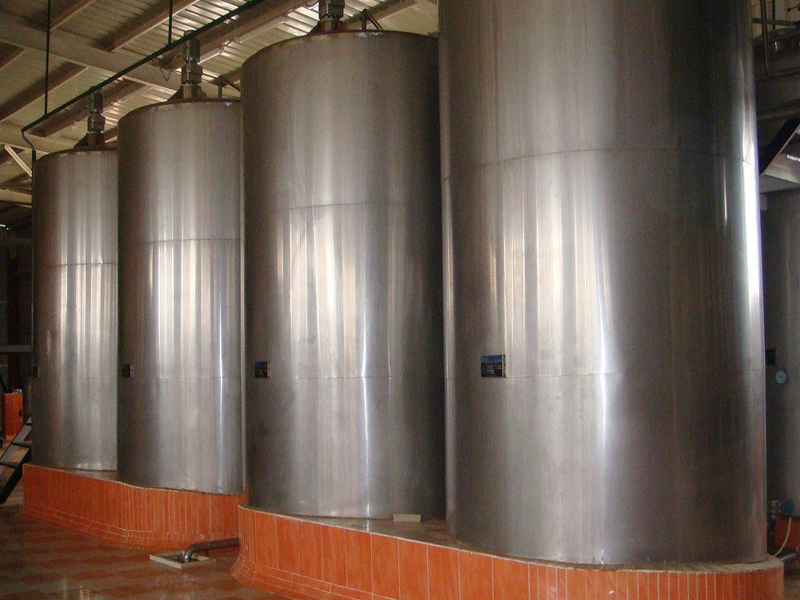
Core equipment: insulated milk bin, dual filter, degassing tank, centrifugal milk purifier, plate sterilizer, refrigeration unit
Section 2: Standardized ingredients and homogenization (key to formula milk powder)
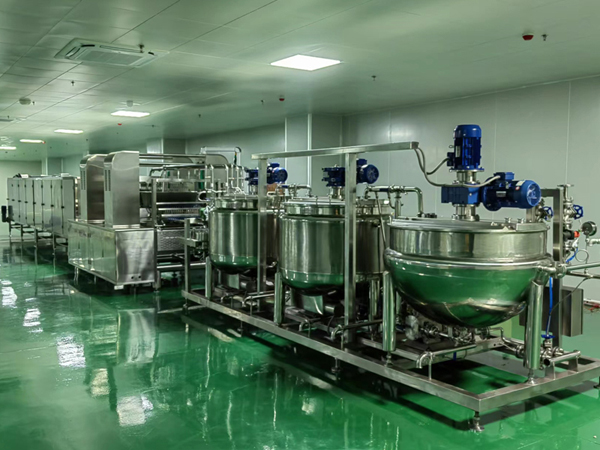
Accurately adjust fat, lactose, whey powder, vegetable oil, and minerals according to the product formula; Water soluble nutrients dissolve in a vacuum mixing tank.
-High pressure two-stage homogenizer (15-25MPa): crushes fat balls, prevents product delamination, and improves adjustability
-The ingredients are fully enclosed and circulated, with high-precision weighing/flow meter measurement, ensuring even mixing of nutrients
Core equipment: Vacuum batching dissolution tank, high shear emulsification tank, high-pressure homogenizer, material temporary storage tank
Section 3: Vacuum Multi effect Concentration (Energy saving Pre dehydration)
The energy consumption of direct spray drying of milk is extremely high. First, the water is evaporated at low temperature through the falling film multi effect vacuum evaporator
-The boiling point of the vacuum environment decreases, and the evaporation temperature is 45-65 ℃, which maximizes the protection of protein thermosensitive nutrition
-After concentration, the milk solids are increased to 45% – 50%, greatly reducing the load of spray tower and saving steam energy consumption
Core equipment: Double/triple effect falling film evaporator, condensate recovery system, material high-pressure conveying pump
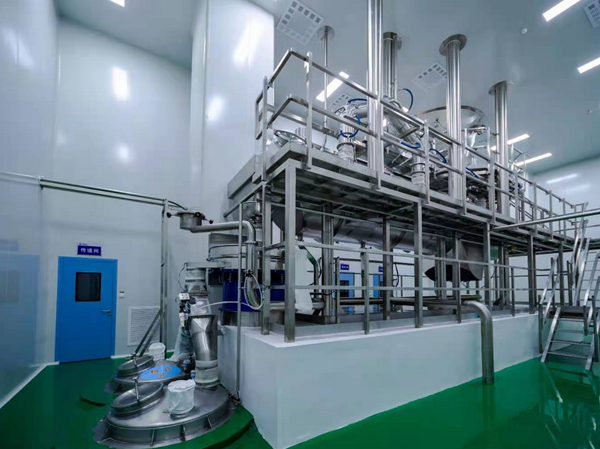
Section 4: spray drying tower (core host of the whole production line)
Concentrated milk is pumped by a high-pressure pump into a tower top atomizer (centrifugal/high-pressure nozzle), where it is ground into tiny droplets at the micrometer level;
Hot air enters from the top of the tower at 160-220 ℃, and the droplets exchange heat instantly (0.2-0.5 seconds). The water evaporates rapidly and falls to the bottom of the tower to form milk powder particles; The exhaust temperature should be controlled at 75-90 ℃, and the final moisture content of the milk powder should be controlled at 2.5-4.5%. The tail gas is matched with a cyclone dust collector to recover fine powder for reflux granulation.
Core equipment: spray drying main tower, hot air purification heating system, centrifugal atomizer, cyclone separator, fine powder recovery pipeline
Section 5: Fluidized bed post-treatment (granulation, secondary drying, cooling)
Hot milk powder enters the vibrating fluidized bed from the bottom of the drying tower and is divided into three functional zones:
1. Hot air section: secondary drying to reduce residual moisture
2. Cold air section: Quickly cool to within 30 ℃ to prevent high-temperature agglomeration and fat oxidation
3. Agglomeration granulation: Fine powder is re bonded to obtain porous large particle milk powder, which is not easily clumped when brewed (instant process)
Supporting equipment: vibrating fluidized bed, closed negative pressure conveying system, dust removal system
Section 6: Powder screening and temporary storage (adding dry mixing to the dry wet composite line)
1. Vibration grading screen filters coke powder and agglomerated coarse particles; Qualified powder is sent to a sealed finished powder warehouse
2. Wet dry composite process: The base powder enters the clean dry mixing workshop, and low-temperature mixing of nutrients such as vitamins, probiotics, DHA, etc. that are not resistant to high temperatures (dry pre mixer, 3D mixer) is carried out to compensate for the loss of thermosensitive nutrients due to high temperatures in the wet process. This is the mainstream solution for infant formula powder
Section 7: Fully automatic packaging section (clean A-level workshop)
The entire closed automated packaging line has zero manual contact:
Empty can sterilization → spoon feeding → screw/weighing filling → online weighing re inspection → vacuum nitrogen sealing (reducing oxygen content in the can and extending shelf life) → metal detection/foreign object X-ray detection → coding → sealing the outer cover → packing and palletizing for storage.
The packaging forms are divided into iron cans (400g/800g/900g), aluminum foil self-supporting bags, and large packaging 25kg base powder bags
Packaging line equipment: empty can sterilization machine, vacuum feeding machine, powder filling scale, nitrogen filling and sealing machine, weight sorting machine, metal detector, palletizing robot
2、 Dry milk powder process (only for preparing milk powder)
All raw materials are made from finished milk powder, whey powder, and nutrient powder; No need for fresh milk, concentration, spray drying tower.
Process: Raw material acceptance → Outsourcing dust removal and sterilization → Unpacking and feeding → Precise metering and pre mixing → Closed three-dimensional mixing → Screening → Packaging.
Advantages: Small investment, low temperature retention of active nutrients; National regulations prohibit the use of dry production for whole/skim milk powder
3、 Whole line supporting public system (mandatory requirement for dairy GMP)
1. Fully automatic CIP in place cleaning system: automatic circulation of acid-base hot water to clean all tanks, pipelines, and drying towers, without the need for manual disassembly, to prevent cross contamination, and mandatory configuration of infant formula milk powder
2. Clean air conditioning system: ingredients, drying and discharging, packaging areas meet the standards of food clean workshops, and control microorganisms and dust
3. Central control PLC automation system: automatic collection and storage of temperature, pressure, and flow throughout the entire production line, achieving full traceability of products throughout the entire production chain
All rights reserved:Zhi Yan Group Co., Ltd SitemapSitemapCandy making machine candy production line Toffee production line biscuit production line lollipop production line Gummy production line Popping boba production lineManufacturer
-7854.jpg)