ZHI YAN Group Co.,Ltd Leading technology Custom machinemachine manufacturers
Contact No.:+86 18221614363
Email:zhimachine@foxmail.com
Contact No.:+86 18221614363
Email:zhimachine@foxmail.com

Adr :636 Yunqiao Road, Pudong New Area, Shanghai, China
Phone : +86 18221614363
Email : zhimachine@foxmail.com
Tel : +86 18221614363
processing capacity:5-50000tons/d
Application scope:milk
Product introduction: Complete introduction of soy milk (soybean milk) fully automatic production line
The
soy milk production line belongs to the complete plant protein beverage
project. The entire production line is divided into eight sections:
pure water preparation, soybean pretreatment, pulp separation, blending
and emulsification, degassing and homogenization, sterilization and
sterilization, filling and packaging, and CIP in-situ cleaning;
According to the final product, it is divided into four mainstream
process schemes: refrigerated short preservation soy milk, room
temperature UHT sterile soy milk,
Automatic soy milk production line
Complete introduction of soy milk (soybean milk) fully automatic production line
The soy milk production line belongs to the complete plant protein beverage project. The entire production line is divided into eight sections: pure water preparation, soybean pretreatment, pulp separation, blending and emulsification, degassing and homogenization, sterilization and sterilization, filling and packaging, and CIP in-situ cleaning; According to the final product, it is divided into four mainstream process schemes: refrigerated short preservation soy milk, room temperature UHT sterile soy milk, bottled/canned sterilized soy milk, and whole bean soy milk.
1、 Complete standard process flow (industrialized room temperature long-lasting soy milk)
Pure water preparation → soybean screening and cleaning → soaking → hot water pulping → pulp residue separation → coarse filtration+fine filtration → pulping, enzyme elimination and deodorization → ingredients preparation (sugar/stabilizer/essence) → vacuum degassing → high-pressure homogenization → UHT ultra-high temperature instantaneous sterilization → sterile insulation tank → sterile filling → code spraying/labeling/drying → packing and warehousing → finished product inspection
1 | Pure water preparation section
Soy milk has extremely high water quality requirements and cannot be directly used with tap water
-Equipment: Raw water tank → Quartz sand filter → Activated carbon filter → Precision filter → Primary/Secondary reverse osmosis equipment → UV sterilization → Aseptic water storage tank
-Function: Remove impurities, residual chlorine, heavy metals, reduce hardness, prevent protein coagulation and sedimentation, and prevent finished products from changing color and flavor
2 | Soybean pretreatment section (the source process for removing fishy smell)
1. Raw material screening and cleaning: vibrating screen+stone removal machine, removing stones, flattened beans, and moldy beans
2. Soaking system: Fully automatic soaking tank, water temperature control:
-Below 10 ℃: Soak for 10-12 hours; 10-25 ℃: Soak for 6 hours? 10h; short-term soaking in warm water ≤ 60 ℃
-Soaking water can be supplemented with a small amount of sodium bicarbonate to soften tissues, inactivate lipoxygenase, reduce bean odor, and improve protein dissolution rate
3. Cleaning and transportation: High pressure spray bean washing machine to remove impurities from bean skins
>Two routes: traditional skin grinding/peeling process (high whiteness high-end soy milk)
3 | Pulping and pulp residue separation section
1. Hot water grinding (80-90 ℃ hot water grinding is the key to removing fishy smell): self separating grinding machine/wet ultrafine grinding machine, with a bean water ratio of about 1:8-1:10; High temperature grinding directly inhibits lipoxygenase and removes bean odor from the source
2. Slurry separation: Horizontal centrifugal separator/three legged filter screen, separate soybean residue; Bean dregs can be recycled into feed
3. Multi stage filtration: Dual filter (80 mesh → 120 mesh → 200 mesh), removes fine particles, and prevents blockage of subsequent homogenization valves and filling nozzles
4. Enzyme inactivation by boiling slurry: Plate/coil boiling slurry machine, 95? 105 ℃ insulation, thoroughly inactivating anti nutritional factors such as trypsin inhibitors and urease, while undergoing secondary deodorization
4 | Mixing section (flavor and stability control)
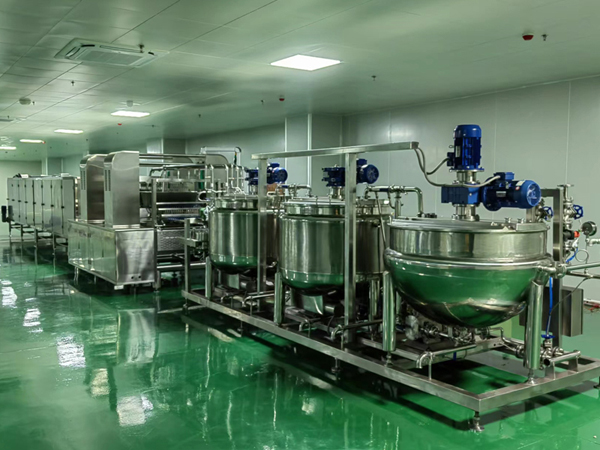
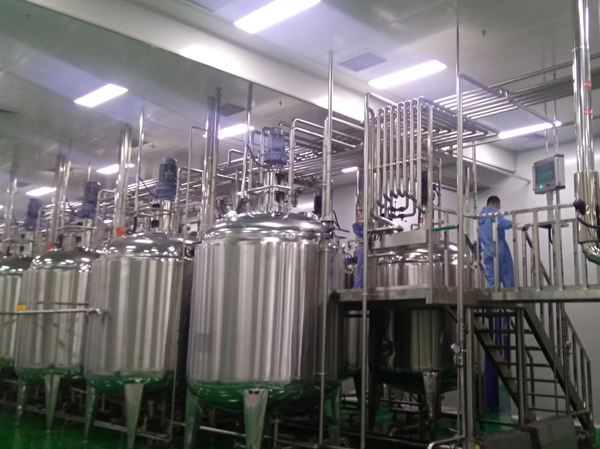
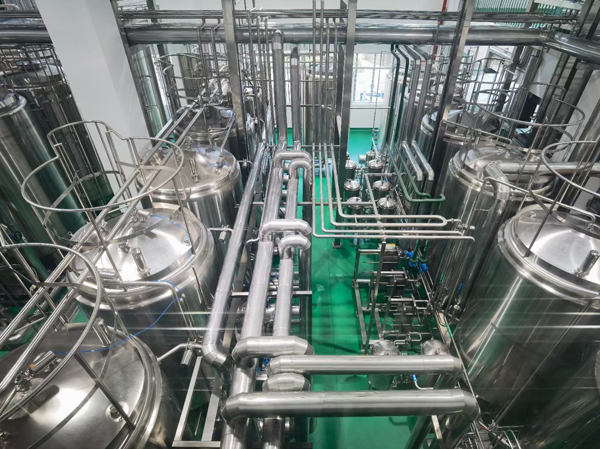
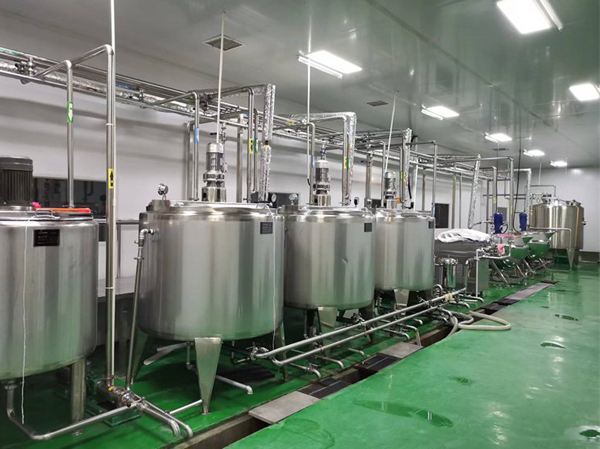
Equipment: Stainless steel mixing tank with insulation mixing, high-speed shear emulsification tank
According to the formula, white granulated sugar, fructose syrup, vegetable oil, compound stabilizer (CMC? Na, xanthan gum, carrageenan), edible essence, nutrition enhancer (calcium, vitamins) are put in, and the solution is completely dissolved by hot water high-speed shearing; Add sterile water to a constant volume and stir evenly.
After blending, filter carefully again to prevent the stabilizer from clumping.
5 | Vacuum degassing+high-pressure homogenization (core process for preventing delamination and precipitation)
1. Vacuum degassing tank: Vacuum degree is about 0.08~? 0.095MPa, Remove dissolved oxygen and volatile odorous substances inside the slurry; Reduce post oxidation browning and protect homogeneous sealed components
2. High pressure homogenizer (core equipment of the entire production line)
-Process parameters: primary homogenization pressure 18-25MPa, secondary pressure 5-8MPa, feed temperature 70-80 ℃
-Function: Crush fat globules and large protein particles to form a stable emulsion system, solving the industry pain points of floating oil on the top and settling at the bottom of soy milk; High end product configuration with secondary colloid mill pre refinement
6 | Sterilization section (determines shelf life, 3 mainstream solutions)
1. Plan A: UHT ultra-high temperature instantaneous sterilization (with a shelf life of 6-12 months at room temperature, mainstream in the market)
Plate/tube type UHT sterilizer: 135-140 ℃, insulation for 3-5 seconds, rapid heating and cooling to achieve commercial sterility, and retain the natural flavor of soy milk to the maximum extent; Backend docking sterile filling system (Tetra Pak, sterile PET bottles)
2. Plan B: Hot filling (short term bottled soy milk, 3-6 months)
Sterilize to 85-90 ℃, pour high-temperature directly into heat-resistant PET bottles, rely on the residual temperature of the liquid to sterilize the bottle mouth, and store after cooling
3. Plan C: Filling first, followed by secondary high-pressure sterilization (glass bottles, tin cans)
After filling and sealing, it is sent to a sterilization kettle for high-pressure steaming and sterilization at 121 ℃; The equipment cost is lower, but prolonged high-temperature steaming results in soy milk with a stronger cooked flavor and a yellowish color
7 | Filling and post packaging section
Match the entire unit according to the packaging form:
-Tetra Pak/Kangmei Packaging: Aseptic Paper Packaging Filling Machine
-PET plastic bottles: bottle flushing → filling → capping three in one unit, blow dryer, labeling machine, inkjet printer
-Easy to pull cans: Easy to pull can filling and sealing machine, spray cooling tunnel
-Cup Breakfast Soy Milk: Fully Automatic Cup Filling and Sealing Machine
Finally: Spray production date → Air drying → Labeling → Packing → Stacking and warehousing
8 | CIP automatic cleaning system
The entire pipeline, tank, sterilizer, and homogenizer are equipped with a CIP cleaning station, which uses acid-base solution and hot water for automatic circulation cleaning and disinfection, without the need for manual disassembly, meeting food SC production standards and avoiding cross contamination.
2、 Comparison of Three Typical Soy Milk Production Lines
|Product type | Sterilization method | Packaging form | Shelf life | Production line configuration characteristics|
|Fresh soymilk (breakfast soybean milk) | pasteurization 85-90 ℃ | plastic cup/bottle refrigeration | 2-7 days | simple configuration, no need for sterile filling, low cost|
|Room temperature sterile soy milk | UHT+sterile filling | Tetra Pak bricks, sterile PET | 6-12 months | Complete sterile system with high degree of automation|
|Bottled/canned soy milk | Sterilization kettle after filling | Glass bottles, metal cans | 9? 12 months | No need for sterile workshop, moderate equipment investment|
3、 Complete equipment list for the entire production line
1. Water treatment system
2. Soybean storage bin, vibrating cleaning screen, stone removal machine
3. Automatic bean soaking and cleaning unit
4. Self separating slurry mill/ultrafine slurry equipment
5. Sludge centrifugal separator, multi-stage filtration unit
6. Cooking and deodorization unit
7. Ingredient mixing tank, high-speed shearing emulsifier
8. Vacuum degassing tank
9. High pressure homogenizer (colloid mill can be optionally upgraded)
10. UHT ultra-high temperature sterilization machine/sterilization kettle
11. Aseptic insulation buffer tank
12. Fully automatic filling and sealing host
13. Drying, labeling, coding, and conveyor line
14. CIP on-site cleaning system, electronic control automation control cabinet
4、 Key production process difficulties and debugging points
1. Bean odor control: Four step combination of hot water grinding, sodium bicarbonate soaking, vacuum degassing, and high-temperature enzyme inactivation; Lipoxygenase is the source of fishy odor and must be inactivated at the moment of grinding
2. Layered precipitation problem: matching of homogenization pressure, stabilizer formula, and degassing effect; The homogenization effect is significantly reduced when the temperature is too low
3. Sterilization browning: The UHT time is strictly controlled to avoid prolonged high temperature heating, which can cause the soy milk to darken in color and produce a steaming and cooking taste
4. Filling nozzle: Front end multi-stage fine filtration, regular CIP cleaning of pipelines and filling valves
5、 Reference for Capacity Specification Selection
Small experimental line: 100-500L/h; Small and medium-sized factories: 1000-3000L/h; Large scale factory: 5000-15000L/h fully automatic turnkey project.
All rights reserved:Zhi Yan Group Co., Ltd SitemapSitemapCandy making machine candy production line Toffee production line biscuit production line lollipop production line Gummy production line Popping boba production lineManufacturer
-7854.jpg)