
ZHI YAN Group Co.,Ltd Leading technology Custom machinemachine manufacturers
Contact No.:+86 18221614363
Email:zhimachine@foxmail.com
Contact No.:+86 18221614363
Email:zhimachine@foxmail.com
Adr :636 Yunqiao Road, Pudong New Area, Shanghai, China
Phone : +86 18221614363
Email : zhimachine@foxmail.com
Tel : +86 18221614363
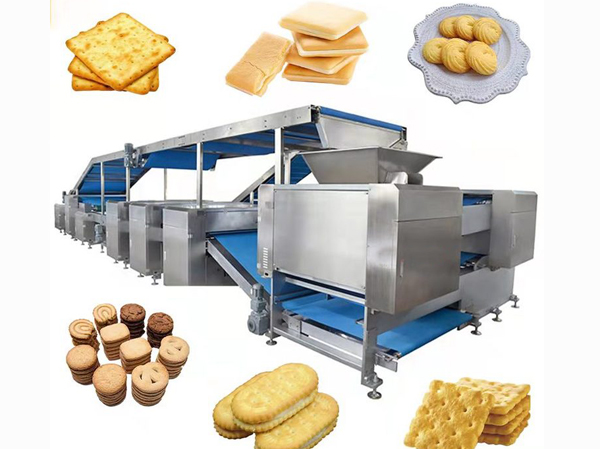
The inspection plan for biscuit roll printing, demolding, and mold sticking of biscuit production line equipment (leaving the green body on the mold roll) is essentially divided into four categories: dough problems, surface condition of the mold roll, demolding oil/powder spraying system, process pressure and temperature. According to the easy to difficult inspection, two phenomena are distinguished first:
① The entire mold roller has a large area of adhesion; ② Local fixed position sticking mold continuously
1、 Dough formula and process reasons (common)
1. The dough is too soft and has a high moisture content
High moisture content, insufficient emulsification of oil and fat, increased stickiness of dough, and difficulty in detachment after being pressed into the mold cavity; The dough temperature is too high (>27 ℃), the oil is too soft, and the viscosity increases.
Control and final temperature: 22-25 ℃ for crispy cookies; Reduce the amount of water added to the formula; Add a small amount of puff pastry appropriately to improve demolding properties; Strictly control the dough's relaxation time and avoid excessive relaxation.
2. Strong gluten and excessive dough elasticity
The dough with high toughness rebounds and pulls when pressed into the mold, making it difficult to separate from the mold; High gluten content in flour, excessive mixing, and fully developed gluten make it easy to stick to the mold.
Reduce the gluten content of flour; Shorten the meeting time; Ensure sufficient relaxation and release the internal stress of the dough.
3. Excessive sugar/syrup ratio
The content of reducing sugar is high, and the dough becomes sticky when heated. After a period of production, it becomes more and more sticky.
Control the amount of syrup used; The workshop environment should not be stuffy or humid.
2、 The surface condition of mold roll itself
1. Rough, worn, and scratched mold cavity
The polishing of the new mold is not in place, and the old mold has been worn and pitted for a long time. The surface blank is embedded in fine scratches and cannot be removed; Corners, fonts, patterns, and grooves are prone to material accumulation.
Regular polishing and grinding of molds; New mold factory mirror polishing; Stop the machine and clean the residual surface dirt of each mold slot.
2. Residual scale and carbon deposition on the surface of the mold roller
Long term production results in the formation of a sticky thin film due to the high-temperature coking of oil, flour, and oil, which becomes increasingly sticky with increasing production; The scraper cannot clean thoroughly.
Equipped with a dedicated mold roller scraper, the blade is tightly attached to the roller surface; Clean the molds in each shift and prohibit dry burning and scaling.
3. Insufficient demolding slope of the mold cavity
The pattern is vertical without any draft angle, and the biscuit blank is stuck in the mold cavity.
Mold processing requirements: Reserve a demolding slope of 3 ° to 5 ° on the side wall.
3、 Demoulding system (spray/powder) debugging
1) Spray type demolding (edible oil atomization spraying)
-Incorrect fuel injection position: sprayed onto the surface, not on the inner wall of the mold roller cavity; Poor atomization and formation of oil spots due to large oil droplets; Too little oil and insufficient lubrication; Excessive oil content can cause the dough to slip and deform.
Debugging points:
1. Align the nozzle with the feeding side of the mold roller; The compressed air pressure is stable, and the oil mist is delicate and uniform;
2. The oil volume should be tested from small to large to form a thin oil film;
3. Constant temperature control of oil pump pressure and oil temperature to prevent oil viscosity changes from causing fuel injection to fluctuate.
2) Powder based demolding (flour/corn starch)
Insufficient powder and uneven fabric; Powder becomes damp and clumps together; The brush is worn and the powder cannot reach the inside of the mold cavity; The more recycled powder contains oil and becomes sticky, the worse it becomes.
Use dry and fresh starch; Regularly replace recycled powder; The brush is tightly attached to the mold roller.
Important reminder: Do not blindly increase the amount of fuel injection/powder spraying, as excessive amount can cause oil stains, white spots, and poor taste on the surface of the finished product.
4、 Pressure roller, feeding, and rubber demolding roller (rubber demolding roller) malfunction
1. Excessive pressure on the feeding roller
The dough is forcefully pressed into the mold cavity under high pressure, filling it too full, and the cookies are stuck in the mold and difficult to peel off.
Reduce the pressure of the feeding roller; Reduce the depth of compression; Control the filling amount.
2. Rubber demolding roller (stripping roller) failure
Rubber rollers age and become hard, with surface wear and insufficient elasticity; The gap between the rubber roller and the mold roller is too small/too large; Uneven pressure, inconsistent left and right pressure, unable to detach on one side.
-Replace aged silicone/nitrile rubber rollers;
-Gap adjustment: Gently press down on the back of the cookie to provide peeling force;
-Uniform pressure at both ends to avoid local sticking caused by insufficient pressure on one side.
3. Abnormal surface temperature of rubber roller
When the temperature is too high, the surface becomes sticky and instead sticks to the green body; The temperature is too low and the rubber is too hard to peel off.
5、 The influence of environment and machine temperature
-The temperature of the mold roller is too high: the oil melts and the viscosity increases;
-The humidity in the workshop is high, and the dough absorbs water and becomes sticky;
Control the mold roller at room temperature without additional heating; Do a good job of cooling and dehumidifying the workshop in summer.
Rapid fault diagnosis method
1. All patterns are evenly adhered to the mold: the dough is too soft/the release oil is insufficient/the feeding pressure is too high
2. Fix a few patterns and stick them all the time: rough mold, dirt accumulation, and dead corners in the mold cavity
3. Only one side of the mold is stuck: the pressure at both ends of the rubber demolding roller is inconsistent, and the fuel injection nozzle is biased to one side
4. Normal operation half an hour before starting up, but it becomes more sticky with increasing production: oil and dirt accumulation on the mold roller, and scraper failure
On site emergency adjustment sequence (production shutdown with minimal losses)
1. First, clean all residual surface dirt on the mold roller and check the scraper
2. Fine tune to reduce the pressure of the feeding roller
3. Appropriately increase the atomization pressure of demolding oil and slightly increase the oil volume test
4. Adjust the adhesive pressure of the rubber demolding roller
5. If not, adjust the dough moisture and lower the dough temperature again
Daily inspection and maintenance items
-Cleaning and polishing molds per shift
-Regularly replace the demolding rubber roller
-Check the atomization effect of fuel injection daily and clean the nozzle blockage
-Monitor dough moisture and temperature stability (corresponding to your previous soft and hard fluctuation issues)
All rights reserved:Zhi Yan Group Co., Ltd SitemapSitemapCandy making machine candy production line Toffee production line biscuit production line lollipop production line Gummy production line Popping boba production lineManufacturer


