ZHI YAN Group Co.,Ltd Leading technology Custom machinemachine manufacturers
Contact No.:+86 18221614363
Email:zhimachine@foxmail.com
Contact No.:+86 18221614363
Email:zhimachine@foxmail.com

Adr :636 Yunqiao Road, Pudong New Area, Shanghai, China
Phone : +86 18221614363
Email : zhimachine@foxmail.com
Tel : +86 18221614363
processing capacity:5-50000tons/d
Application scope:tomato Fruit and vegetable
Product introduction: Detailed introduction to the complete production line of tomato sauce
The
entire industrial tomato sauce production line is divided into seven
sections: raw material receiving, cleaning and sorting → crushing and
enzyme inactivation → refining and refining → vacuum concentration → UHT
sterilization → aseptic filling → final packaging and CIP cleaning;
Mainstream production capacity: Processing 60-2000 tons of fresh
tomatoes per day, with a finished concentrated sauce specification of
28? 30 ° Bx (hot rupture), 36-38 ° Bx (cold rupture), the export
packaging is generally 220L sterile steel drum+sterile inner membrane
bag.
Automatic tomato sauce production line
Detailed introduction to the complete production line of tomato sauce
The entire industrial tomato sauce production line is divided into seven sections: raw material receiving, cleaning and sorting → crushing and enzyme inactivation → refining and refining → vacuum concentration → UHT sterilization → aseptic filling → final packaging and CIP cleaning; Mainstream production capacity: Processing 60-2000 tons of fresh tomatoes per day, with a finished concentrated sauce specification of 28? 30 ° Bx (hot rupture), 36-38 ° Bx (cold rupture), the export packaging is generally 220L sterile steel drum+sterile inner membrane bag.
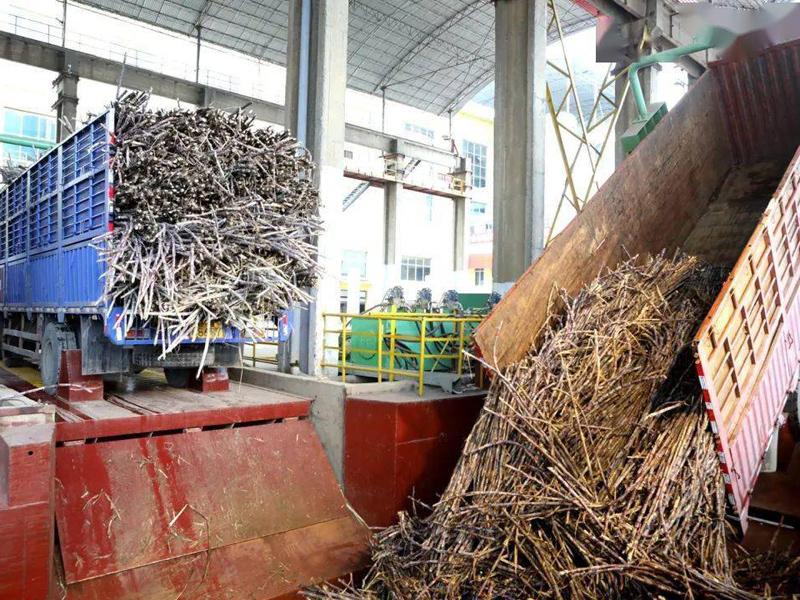
1、 Section 1: Raw material receiving, lifting, cleaning, sorting (pre-treatment)
Process purpose
Remove soil, branches, leaves, stones, green fruits, and rotten fruits to ensure that the raw materials are clean and qualified.
1. Material receiving trough/unloading platform: dump truck pours in, sprays pre washed sediment; Bottom sediment discharge.
2. Spiral elevator/scraper elevator: 304 stainless steel conveyor for tomatoes, without squeezing or breaking the skin.
3. Floating washing machine (bubble cleaning): using water buoyancy, weeds and dead leaves float up and are discharged, while stones sink; High pressure spray secondary flushing.
4. Fruit sorting table
-Manual sorting with illuminated conveyor belt to remove rotting, green shoulder, and insect fruits;
-The high-end line is equipped with a photoelectric color selection machine, which automatically eliminates defective products by color and defect.
5. Spray rinsing machine: Finally rinse with clean water, drain the water and enter the crushing section.
Complete equipment list: unloading tank, screw pump, float washer, brush washer, elevator, fruit inspection conveyor, photoelectric sorting machine, waste conveying system.
2、 Section 2: Crushing+Preheating Enzyme Annihilation (Hot/Cold Crushing Process)
>Hot break HP: Quickly heat up to 85 after crushing? 90 ℃ pectinase inactivation → thick and non layered finished product (28-30Bx mainstream export sauce)
>Cold breaking CP: first break (at room temperature), then 60? 65 ℃ short-term preheating → better aroma and stronger fluidity (36-38Bx high concentration sauce)
1. Spiral crusher/crushing pump: Crush tomatoes into 5 pieces? 10mm fruit pulp fragments; Transport while crushing.
2. Tubular preheater (jacketed heat exchanger)
-Hot rupture: instantaneous heating of 85? 90 ℃, insulation of 15? Passivation of pectinase in 30 seconds; Lock in pectin and increase viscosity;
-Cold break: 62? Soften the fruit flesh at 68 ℃ for easy juicing.
3、 Section 3: Multi stage Beating and Refining (Peeling, Seeding, and Slag Removal)
Goal: Separate the skin and tomato seeds to obtain delicate and pure tomato juice (4-5 ° Brix)
1. Three in series pulping unit (standard high-end)
-First level coarse sieve: 1.2mm, separation of large skin residue;
-Secondary sieve: 0.8mm;
-Third level fine sieve: 0.4mm, finely ground slurry;
2. Slag slurry recovery system: Crust residue is squeezed again for secondary juice extraction to improve the utilization rate of raw materials; Waste residue is transported outside for use as feed/organic fertilizer.
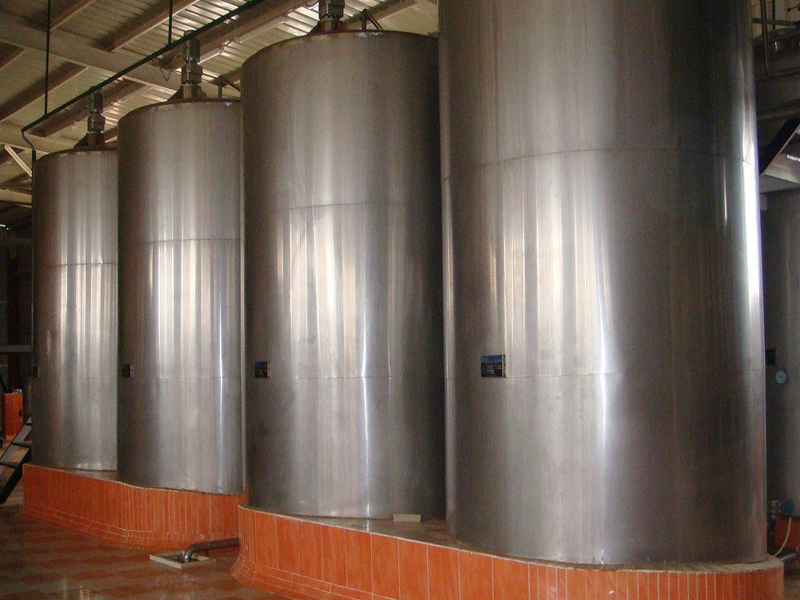
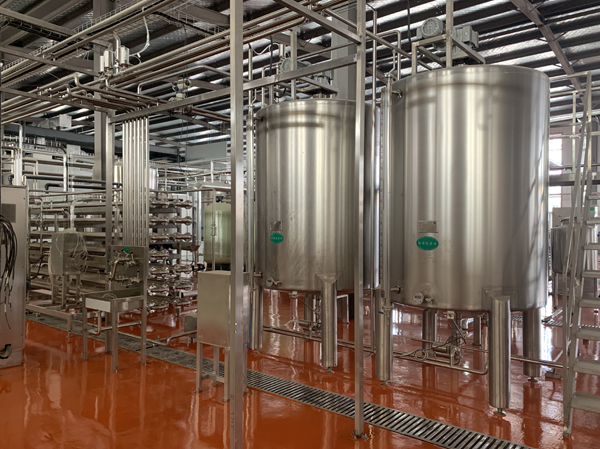
3. Intermediate buffer tank: stores tomato juice and transports it to the concentration section.
Core equipment: Three stage beating machine, fine filter, slag juice extruder, screw conveying pump, buffer storage tank.
4、 Section 4: Multi effect vacuum concentration (the core unit with the highest energy consumption in the entire production line)
Boiling water at 100 ℃ under normal pressure; 60 under low vacuum pressure? Water can evaporate at 65 ℃, protecting lycopene, color, and flavor at low temperatures.
1. Equipment type: Falling film multi effect vacuum evaporator (dual effect/triple effect/quadruple effect)
-Small line: Double effect concentration (daily processing of 60-250t tomatoes)
-Large scale factory: Three effect vacuum concentrator (500-2000 tons/day), steam waste heat recovery, energy saving of over 40%
2. Process control parameters
-Vacuum degree:? 0.08~? 0.09MPa; Evaporation temperature is 60-65 ℃;
-Real time monitoring of Brix concentration using an online refractometer, and automatic discharge when the set value is reached;
-Target concentration: 28? 30 / 36? 38 ° Bx.
5、 Section 5: UHT ultra-high temperature instantaneous sterilization
The concentrated high viscosity tomato sauce must be sterilized to ensure a long-term shelf life (stored at room temperature for 18-24 months)
1. Tube type UHT sterilizer (special for high viscosity)
-Hot sauce: 105? 110℃ / 30? 60s;
-High concentration cold sauce: 115? 120 ℃ short-term insulation;
2. After sterilization, quickly cool to the filling temperature (80-85 ℃) to avoid long-term discoloration and browning caused by high temperature.
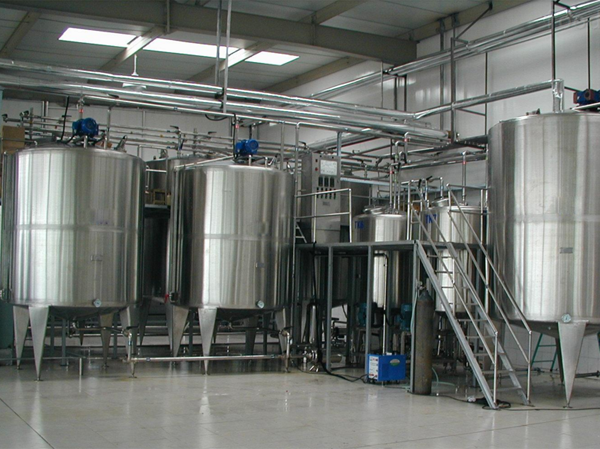
6、 Section 6: Aseptic Filling Section (Two Mainstream Packaging Modes)
Mode A: Industrial large packaging (foreign trade raw material sauce, 220L sterile bucket)
Aseptic filler
-Sterilization of sterile bags using hydrogen peroxide steam; Aseptic environment for filling chamber;
- 80? 85 ℃ high temperature sterile filling, automatic sealing; Load into iron drums and stack.
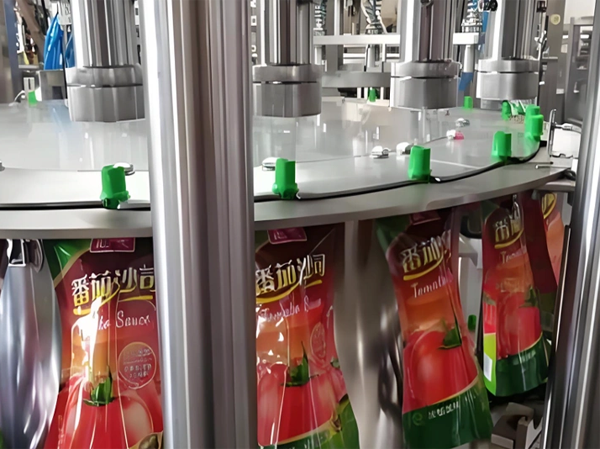
Mode B: Terminal small packaging (commercial tomato sauce, tomato sauce)
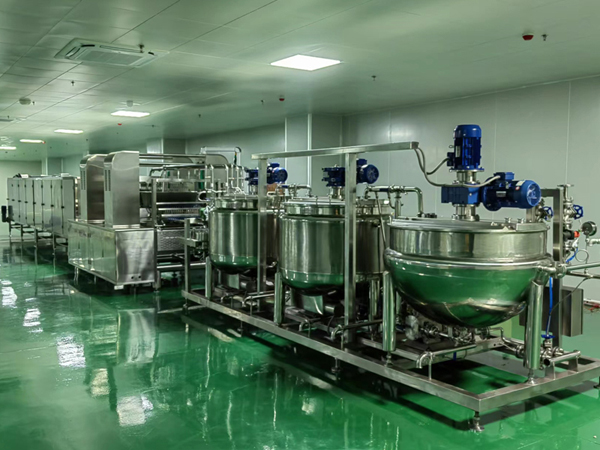
Need to add a mixing system (mixing tanks, adding sugar, salt, vinegar, spices), and then sterilize and fill: glass bottles, tin cans, self-supporting bags, small aluminum foil bags, plastic bottles; Supporting bottle washing machine, capping machine, spray cooling tunnel, drying, coding, labeling machine, packing machine
7、 Auxiliary supporting system (essential for food factories)
1. CIP on-site cleaning system: acid-base cleaning circuit, the entire pipeline and equipment do not need to be disassembled for automatic cleaning and disinfection, meeting food GMP requirements;
2. PLC central control system: The control room monitors temperature, vacuum, concentration, flow rate, and alarm records uniformly;
3. Public works: boiler steam system, refrigeration cooling water, compressed air, pure water preparation;
4. Quality inspection online monitoring: refractometer pH、 Colorimetric testing and microbiological sample retention laboratory.
Comparison of Two Mainstream Processes
|Project | Hot crushing HP (28-30 ° Bx) | Cold crushing CP (36-38 ° Bx)|
|Heating timing | 85 immediately after crushing? 90 ℃ enzyme inactivation | Preheat to 60 ° C after fragmentation? 65℃|
|Product characteristics | Viscous, high pectin, not easy to layer | Rich aroma, better fluidity|
|Usage | Export raw material sauce, tomato sauce base | High concentration high-end tomato sauce|
Optional expansion of product line
After the transformation of the same basic production line, it can produce products such as tomato juice, diced tomatoes, tomato sauce, tomato seasoning sauce, concentrated pomegranate juice, concentrated fruit and vegetable pulp, etc.
All rights reserved:Zhi Yan Group Co., Ltd SitemapSitemapCandy making machine candy production line Toffee production line biscuit production line lollipop production line Gummy production line Popping boba production lineManufacturer
-7854.jpg)