ZHI YAN Group Co.,Ltd Leading technology Custom machinemachine manufacturers
Contact No.:+86 18221614363
Email:zhimachine@foxmail.com
Contact No.:+86 18221614363
Email:zhimachine@foxmail.com

Adr :636 Yunqiao Road, Pudong New Area, Shanghai, China
Phone : +86 18221614363
Email : zhimachine@foxmail.com
Tel : +86 18221614363
processing capacity:5-50000tons/d
Application scope:Fruit and vegetable juice drinks, carbonated carbonated drinks Tea beverage
Product introduction: The juice production line is a modular
fully automatic food processing system, with all main equipment made of
SUS304/316L food grade stainless steel, PLC automatic control, and
support for CIP on-site cleaning; According to product positioning, it
is divided into four types: fresh fruit NFC production line,
concentrated and reduced FC production line,
Complete Introduction to Juice Production Line
The juice production line is a modular fully automatic food processing system, with all main equipment made of SUS304/316L food grade stainless steel, PLC automatic control, and support for CIP on-site cleaning; According to product positioning, it is divided into four types: fresh fruit NFC production line, concentrated and reduced FC production line, pulp cloudy juice production line, and HPP cold pressed high-end juice production line. The production capacity range is 0.5-40 tons/hour, suitable for various packaging forms such as PET bottles, cans, glass bottles, and self standing bags.
1、 Comparison of two mainstream process routes
Route 1: NFC Non Concentrated Reduced Juice (Fresh Fruit Direct Squeeze)
Process flow: Fresh fruit acceptance → Sorting → Cleaning → Impurity removal (peeling/nucleating) → Crushing → Pressing → Coarse filtration → Degassing → Homogenization → Sterilization → Aseptic filling → Post packaging
Features: No high-temperature concentration process, better preservation of fruit aroma and nutrients; Divided into room temperature long-term preservation (UHT aseptic filling) and cold chain short-term preservation (pasteurization/HPP cold sterilization), the production cost is higher.
Route 2: FC concentrated reduced juice (mainstream for industrial mass production)
Process flow: Fresh fruit juice extraction → Vacuum concentration to produce concentrated juice → Storage and transportation → Mixing (water, sugar, acidity regulator) → Filtration → Homogenization and degassing → Sterilization → Hot filling/aseptic filling
Features: After concentration, the volume is reduced to 1/5-1/7 of the original juice, with low storage and transportation costs, and stable production throughout the year. Most affordable juices on the market are produced using this process.
2、 Complete section disassembly (full process equipment and process parameters)
Section 1: Raw material pretreatment system
Purpose: To remove bad fruits, sediment, and pesticide residues, complete peeling and core removal, and prepare for juice extraction
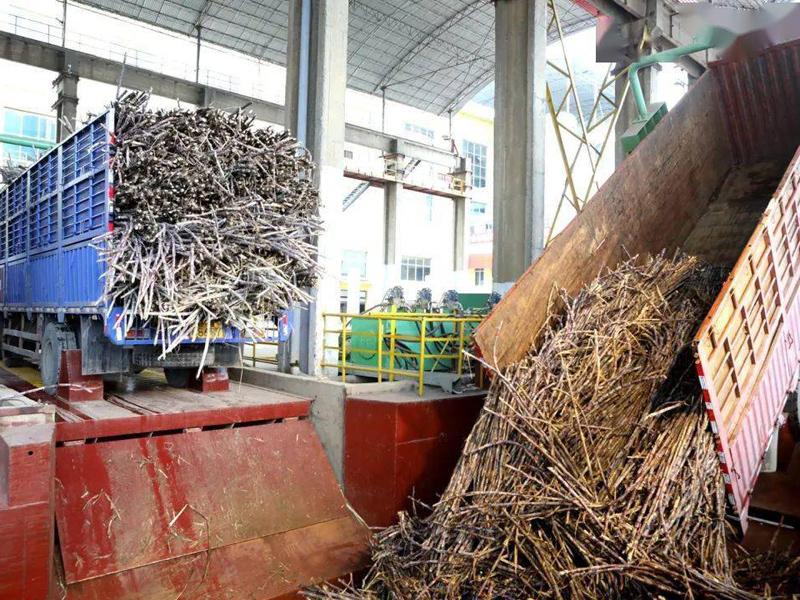
1. Lifting conveyor: belt/screw elevator
2. Fruit inspection and sorting platform: manual/photoelectric grading to remove rotten and insect infested fruits
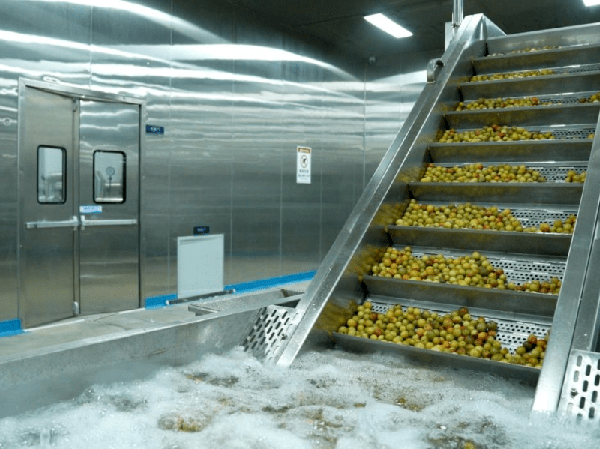
3. Cleaning unit: Bubble cleaner+brush spray cleaner; High pressure washing of hard fruits, gentle bubble cleaning of berries
4. Pre processing machines: Core removal machine, alkaline solution hot pressing peeling machine, mechanical peeling machine, crusher
>Applicable materials: fruits and vegetables such as apples, oranges, grapes, mangoes, strawberries, peaches, etc
Section 2: Juice Extraction and Coarse Separation System
1. Spiral juicer: suitable for hard fruits and vegetables such as apples, pears, carrots, etc., with a juice extraction rate of 75% -82% and thorough separation of residue and juice
2. Belt press: High moisture fruits such as grapes and berries are pressed gently to protect their fruity aroma
3. Beating and refining machine: for pulp type fruits such as mangoes and peaches, to make puree (with pulp juice)
4. Coarse filtration: vibrating screen, rotary vibrating screen, remove impurities such as fruit skin, coarse fibers, and large particles of fruit seeds
-9934.jpg "Fully automatic beverage production line (2).jpg")
Section 3: Clarification/Refinement Section (Product Selection)
1. Clarify fruit juice (apple juice, grape juice)
Enzymatic hydrolysis tank (pectinase maintained at 50-55 ℃) → Horizontal centrifuge for colloid separation → Diatomaceous earth filtration/ultrafiltration membrane filtration, resulting in complete transparency of the juice
2. Muddy juice/fruit pulp juice (orange juice, peach juice)
Skip enzymatic clarification and retain natural fruit pulp particles; Increase homogenization and degassing to prevent stratification and precipitation
-Degassing machine: Vacuum degassing to prevent juice oxidation and discoloration
-High pressure homogenizer: pressure 18-25MPa, crushes small fruit pulp particles, improves stability, and prevents storage stratification
Section 4: Blending System (Essential for FC Juice/Fruit Flavored Beverages)
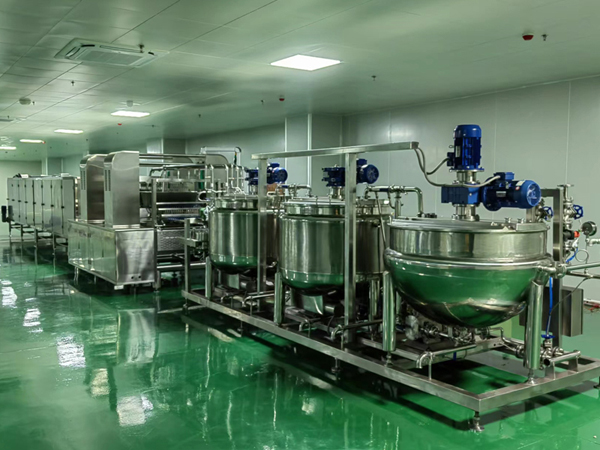
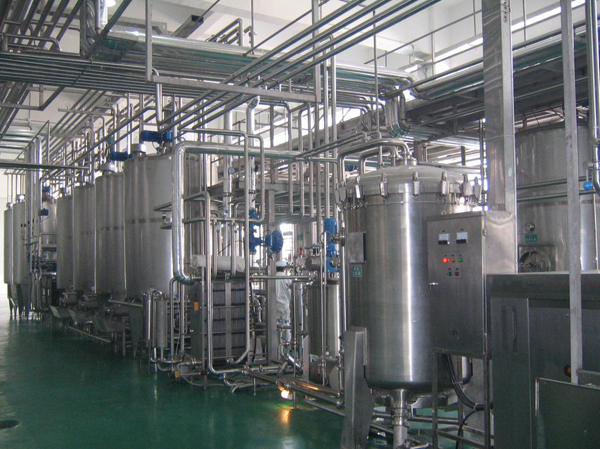
Equipment: sugar dissolving tank, mixing tank, plate heat exchanger, batching pump
Add purified water, white granulated sugar, citric acid, vitamins, essence and stabilizer according to the formula; Online detection of sugar content and acidity, automatic proportioning, ensuring consistent taste for each batch.
Section 5: Sterilization system (determines shelf life)
1. UHT ultra-high temperature instantaneous sterilization
135-145 ℃, keep warm for 2-6 seconds; Rapid heating and cooling, maximum preservation of flavor; Combined with aseptic filling, the shelf life at room temperature is 6-12 months
2. Pasteurization: 75-85 ℃/15-30s, better nutrient retention, cold chain for finished products, shelf life of 7-30 days
3. HPP ultra-high pressure cold sterilization (high-end NFC): 400-600MPa room temperature high-pressure sterilization, completely does not damage vitamins, cold locks fresh, cold chain sales, expensive cost
Section 6: Filling and sealing system (3 filling schemes)
1. Hot filling (88-92 ℃): PET bottle three in one washing, filling and spinning machine, pour the bottle for 15-30 seconds after filling, and use the residual temperature to sterilize the bottle cap; Moderate equipment investment, most commonly used by domestic beverage factories
2. Aseptic cold filling: The sterilized juice is cooled to room temperature and filled in a sterile environment; Protecting thermal sensitive flavor, choosing high-end juice, high equipment cost
3. Post sterilization filling: After the filling and sealing are completed, they are sent to the spray sterilization tunnel for secondary sterilization, which is commonly used for glass bottles and cans
Section 7: Post packaging assembly line
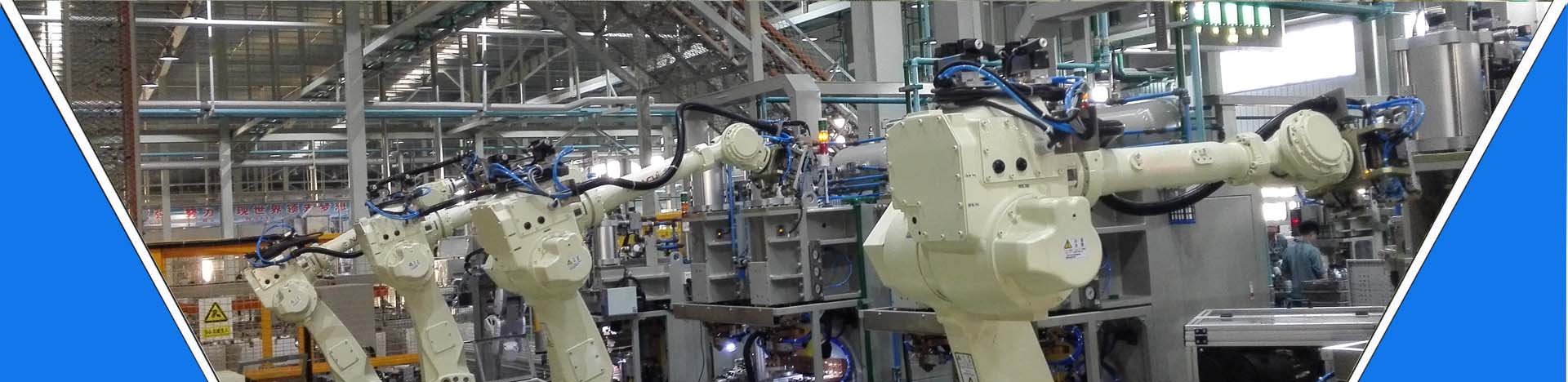
Cooling tunnel → drying machine → coding machine → labeling and shrinking machine → light inspection (manual/visual inspection for leakage and impurities) → film wrapping machine/packing machine → palletizing robot storage
Section 8: Public supporting system
1. Water treatment system: reverse osmosis pure water equipment, production mixing water
2. CIP cleaning system: Acid alkali hot water circulation cleaning all pipelines and tanks without dismantling, ensuring hygiene
3. Refrigeration/heating boilers, air compressors, central control systems
3、 Differences in configuration of different juice production lines
|Product type | Key equipment | Filling method | Storage conditions|
| ---- | ---- | ---- | ---- |
|Clarify juice | Ultrafiltration system, diatomaceous earth filter | Aseptic filling | 12 months at room temperature|
|Cloudy fruit juice/pulp juice | High pressure homogenizer, vacuum deaerator | Hot filling | 6-12 months at room temperature|
|NFC Fresh Juice | Low Temperature UHT/HPP Equipment | Aseptic Cold Filling | Room Temperature/Cold Chain|
|Concentrated fruit juice | Falling film vacuum evaporator | Aseptic large barrel filling | Refrigerated storage|
4、 Advantages of whole line automation
1. The entire process is transported in a closed pipeline, reducing manual contact and complying with food SC production standards
2. Real time online monitoring of temperature, pressure, and sugar content, with traceable data
3. Flexible modular design, one production line can switch between multiple fruits and packaging specifications
4. CIP automatic cleaning, short replacement cleaning time, reduces the risk of cross contamination
5、 Capacity selection reference
-Small experimental line: 0.5-1 ton/hour, suitable for small factories, research and development sampling
-Medium sized industrial line: 3-10 tons/hour, mainstream configuration for small and medium-sized beverage factories
-Large turnkey project: 15-40 tons/hour, large-scale fruit and vegetable deep processing base
All rights reserved:Zhi Yan Group Co., Ltd SitemapSitemapCandy making machine candy production line Toffee production line biscuit production line lollipop production line Gummy production line Popping boba production lineManufacturer
-7854.jpg)