
ZHI YAN Group Co.,Ltd Leading technology Custom machinemachine manufacturers
Contact No.:+86 18221614363
Email:zhimachine@foxmail.com
Contact No.:+86 18221614363
Email:zhimachine@foxmail.com
Adr :636 Yunqiao Road, Pudong New Area, Shanghai, China
Phone : +86 18221614363
Email : zhimachine@foxmail.com
Tel : +86 18221614363
The reason why the packaging and sealing of the biscuit production line are not firmly sealed
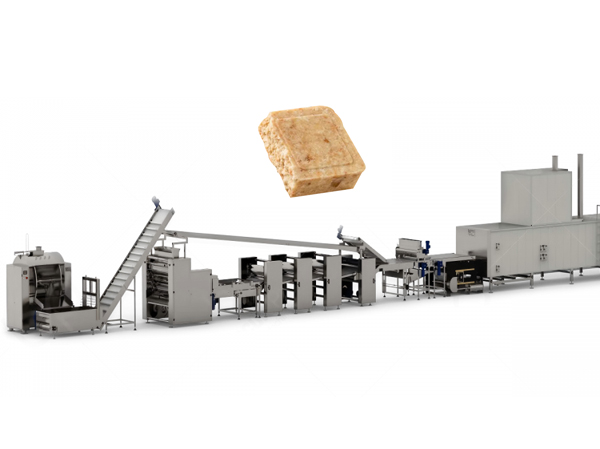
The biscuit packaging processed by the biscuit production line is falsely sealed, the sealing is not firm, and there is a rectification plan for air leakage. The consequence of air leakage is that the biscuits absorb moisture and become soft, and the shelf life is scrapped; Virtual sealing is not a single cause, but can be divided into six directions: heat sealing temperature, pressure, sealing time, packaging film, film transportation, and knife mold contamination. They should be sorted according to the order of on-site investigation.
1、 Inappropriate heat sealing temperature
1. Low temperature: The surface of the film only softens, without fusion, and can be easily peeled off with a light hand
2. High temperature: excessive melting of the film, thinning of the seal, burning, and leakage of pinholes; The film is crispy and prone to cracking when baked
Reference range (BOPP composite biscuit film): 120-160 ℃; The actual temperature depends on the material of the film and the speed of film movement; The faster the production line, the higher the temperature needs to be set.
Rectification method:
-Segmented heating for testing: low temperature → qualified sealing → no burning damage;
-Thermocouples are calibrated regularly, and the displayed temperature is not equal to the actual surface temperature of the roller; Local uneven heating of the heating block (damage to the heating tube) may result in one section being tightly sealed and the other being virtually sealed.
2、 Insufficient heat sealing pressure/uneven pressure on both sides
1. The pressure of the heat sealing roller spring is too low, and the two layers of film are not tightly pressed together, with an air gap in between, resulting in incomplete fusion;
2. Inconsistent pressure at both ends: one side is tightly sealed, while the other side is virtually sealed and leaks air;
3. The sealing wheel is worn, the surface is uneven, and there is insufficient pressure in some areas.
Debugging:
-Symmetrically tighten the pressure regulating bolts on both sides; Ensure even width and pressure of the entire sealing wheel;
-The greater the pressure, the better. If the pressure is too high, the molten film will be squeezed thin, and the sealing strength will deteriorate, resulting in micro pores;
-Replace worn or deformed silicone heat seals in a timely manner.
3、 Insufficient heat sealing and pressure holding time (line speed matching issue)
The speed of the packaging machine is too fast, and the film stays too short after passing through the heat sealing wheel, leaving too little time for heat transfer and fusion.
Phenomenon: Low speed production sealing is qualified, but after speeding up, large-scale virtual sealing begins.
Plan:
1. When accelerating, synchronously increase the heat sealing temperature and appropriately increase the sealing pressure;
2. Double heat sealing (first pre sealing, second final sealing) enhances sealing reliability;
3. If long-term high-speed production is required, extend the contact arc length of the heat seal.
4、 The sealing position is polluted by oil, sugar powder and biscuit chips
Biscuits spray oil and fall off residue, and oil/debris just falls between the two layers of film on the sealing edge → impurities are sandwiched in the middle, and the plastic cannot fuse, forming a virtual seal with air leakage
Typical features: good and bad sealing, and random changes in the position of the virtual seal.
Rectification measures:
1. Remove slag and oil before packaging and feeding;
2. Install a cleaning scraper/high-temperature anti sticking cloth on the heat sealed wheel to wipe off the oil and dirt on the roller surface;
3. Add windproof and dust removal to the material handling station to prevent debris from drifting to the sealing area;
4. Wipe the heat sealing mold every shift.
5、 The problem with the packaging film material itself
1. Insufficient thickness of the inner layer heat sealing layer and poor heat sealing performance; Composite film delamination; Batch quality is unstable;
2. The film becomes damp, resulting in a significant decrease in the heat sealing effect; The storage environment is humid.
Confirm the heat sealing parameters of the supplier's film; Replace the packaging film of qualified food grade high barrier biscuits; The film roll should be stored in a moisture-proof manner.
6、 Film deviation and unstable tension
1. Inconsistent elasticity on the left and right sides of the membrane, resulting in wrinkles and ripples in the seal. The wrinkled position will inevitably leak air;
2. The traction wheel slips, the film feeding positioning is inaccurate, and the overlapping width of the seal fluctuates.
Correct the membrane track and level the tension; Ensure that the overlapping width of the seal is ≥ 3mm; the pressure film roller is not worn or slipping.
7、 Insufficient cooling and shaping (key focus of horizontal pillow packaging machine)
Immediately roll up after heat sealing, as high-temperature sealing has not yet solidified and is prone to slight cracking and air leakage due to pulling.
Add a cooling roller after heat sealing to quickly shape the seal and improve the sealing strength.
8、 Sealing pinhole, edge tearing
1. The cutting edge is not sharp enough, causing small cracks in the film when pulled;
2. The sharp edges of the cookies press against the inner wall of the packaging bag, causing minor damage due to pressure;
Improve the texture of the ingredients and ensure that the corners of the cookies are not directly facing the sealing position; Regularly sharpen the knife.
Quickly distinguish fault phenomena
1. The entire seal is virtually sealed, and the low-speed condition improves: low temperature/insufficient pressure/insufficient heat sealing time
2. One side of the seal is tightly sealed, and the other side leaks air: the pressure at both ends of the heat sealing wheel is unbalanced, the heating is uneven, and the film runs off center
3. The position of air leakage is random, sometimes good or bad: the sealing is polluted by oil and biscuit residue
4. The seal is burnt and there are small holes causing air leakage: the temperature is too high and the pressure is too high
5. There are wrinkles, ripples, and air leakage in the seal: the film tension is unstable, and there is deviation during film movement
On site standard debugging steps
1. Clean all heat sealed wheels, remove grease and residue
2. No load heating, stable temperature insulation for 10 minutes
3. Symmetrically adjust the sealing pressure at both ends
4. Low speed sealing test, hand tear test, gradually increase temperature
5. Speed up verification, it is necessary to open the secondary heat seal
6. Conduct airtightness testing on the finished product (immersion negative pressure leak detection)
Daily quality control measures
1. Every 30 minutes, sample and manually tear to check the sealing strength; Perform immersion leak detection for each shift;
2. Inspection records: heat sealing temperature, pressure, production line speed;
3. Regularly replace silicone heat sealing pads and clean scrapers;
4. Strictly remove slag and oil before packaging to avoid sealing contamination from the source.
All rights reserved:Zhi Yan Group Co., Ltd SitemapSitemapCandy making machine candy production line Toffee production line biscuit production line lollipop production line Gummy production line Popping boba production lineManufacturer


